Awakening to the Essence of Awareness
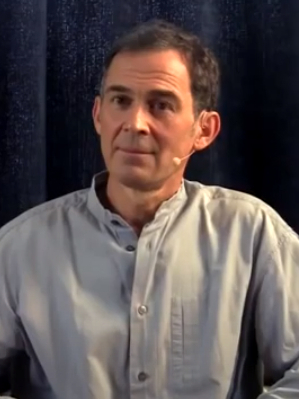
Rupert Spira's assertion that "the greatest discovery is not that we have a self, but that we are awareness" invites us to reconsider the very foundation of our understanding of identity. This profound statement challenges the conventional notion of a fixed self, suggesting instead that our true nature is the awareness that observes and experiences life. The implications of this realization are vast, as it opens the door to a deeper understanding of existence, inviting us to explore the essence of being beyond the confines of personal narrative.
In a world often preoccupied with the pursuit of self-identity and personal achievement, Spira's words serve as a gentle reminder that our essence transcends these transient constructs. The journey toward recognizing ourselves as awareness rather than as a collection of thoughts, emotions, and experiences is a transformative one. It beckons us to awaken to a more expansive reality, where the boundaries of the self dissolve, revealing a profound interconnectedness with all that is. This exploration is not merely philosophical; it is a deeply experiential journey that can lead to lasting peace and fulfillment.
The image / the metaphor
At the heart of Spira's quote lies a rich tapestry of imagery that invites contemplation. The term "discovery" evokes a sense of exploration, suggesting that this realization is not something to be acquired but rather uncovered within ourselves. The juxtaposition of "self" and "awareness" creates a dynamic tension, prompting us to examine the layers of our identity. The use of "awareness" as a noun emphasizes its fundamental nature, suggesting that it is the very fabric of our being, a constant presence that remains unchanged amidst the ebb and flow of life.
Diving deeper into the metaphor, we can envision awareness as a vast ocean, while the self is akin to the waves that rise and fall upon its surface. The waves are transient, shaped by the winds of thought and emotion, yet they are inseparable from the ocean itself. This imagery invites us to recognize that while our personal narratives may fluctuate, the underlying awareness remains a steady and unchanging presence. By shifting our focus from the waves to the ocean, we begin to understand that our true nature is not defined by the transient experiences of life but by the awareness that witnesses them.
In the speaker's tradition
Rupert Spira's teachings are rooted in the non-dual tradition, which emphasizes the unity of all existence and the illusory nature of separateness. Concepts such as "sunyata" (emptiness) and "fana" (annihilation of the self) resonate deeply within this framework, inviting practitioners to dissolve the boundaries of the ego and recognize their inherent connection to the universe. In this context, the realization of being awareness rather than a separate self aligns with the core tenets of non-duality, where the distinction between subject and object fades away, revealing the oneness of all that exists.
In the Advaita Vedanta tradition, which shares philosophical roots with Spira's teachings, the concept of "Brahman" represents the ultimate reality, the unchanging awareness that underlies all phenomena. Texts such as the Upanishads articulate this understanding, emphasizing that the individual self (Atman) is not separate from Brahman but is, in fact, a manifestation of it. This profound realization echoes Spira's assertion, urging us to awaken to the truth of our being as awareness, transcending the illusion of a separate self.
Living the teaching
Consider a modern scenario where this teaching can be applied: a moment of frustration during a challenging work project. In such instances, it is easy to become entangled in the narrative of the self—feeling overwhelmed, inadequate, or stressed. However, by shifting our perspective to recognize that we are the awareness observing these feelings, we can create a space of detachment. This awareness allows us to respond to the situation with clarity and calmness, rather than being swept away by the tumult of our thoughts and emotions.
Another application of this teaching can be found in relationships, particularly during conflicts. When disagreements arise, it is common to identify strongly with our viewpoints, leading to defensiveness and disconnection. By remembering that we are awareness, we can approach these moments with a sense of curiosity rather than judgment. This shift enables us to listen deeply and empathize with the other person's perspective, fostering a deeper connection and understanding that transcends the limitations of the ego.
A reflection
As we contemplate Spira's profound insight, we are invited to explore the nature of our own awareness. What does it mean for you to recognize that you are not merely a collection of thoughts and experiences, but the awareness that observes them? This question serves as a gateway to deeper self-inquiry, encouraging us to peel back the layers of our identity and discover the essence of our being. In this exploration, we may find that the greatest freedom lies not in the pursuit of self, but in the awakening to the awareness that we truly are.



Join the BrightStar Community
Stay connected with daily inspiration, event announcements, and community wisdom