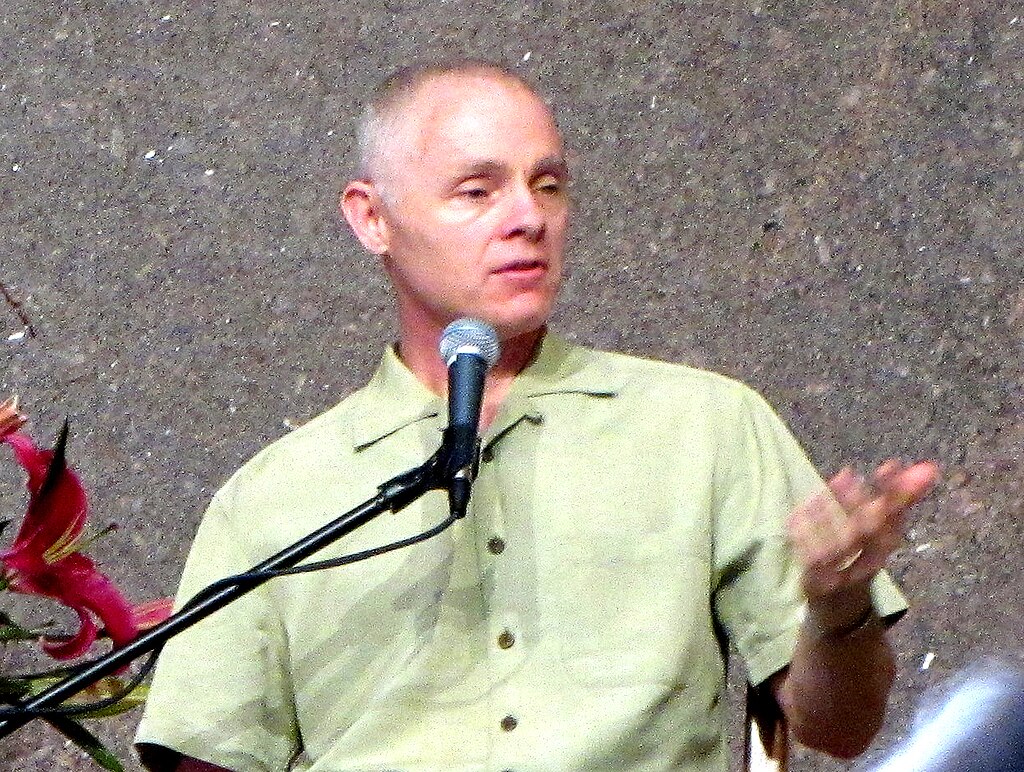
The Journey Beyond Thought: Experiencing the Self
Adyashanti's assertion that "the self cannot be realized through the intellect; it can only be realized through direct experience" invites us to reconsider the very nature of self-awareness and consciousness. In a world dominated by intellectual pursuits and analytical reasoning, this quote serves as a poignant reminder that true understanding transcends mere cognitive comprehension. It emphasizes the importance of experiential wisdom, urging us to seek a deeper connection with our essence beyond the confines of thought.
This perspective is crucial in our contemporary lives, where we often equate knowledge with understanding. The relentless pursuit of intellectual clarity can lead us to overlook the profound insights that arise from direct experience. Adyashanti's words challenge us to step away from the mind's chatter and engage with our inner reality, suggesting that the path to awakening lies not in accumulating information but in immersing ourselves in the present moment and embracing our lived experiences.
The image / the metaphor
The imagery in Adyashanti's quote evokes a sense of movement from the abstract to the tangible. The term "realized" suggests an awakening or unveiling, while "direct experience" implies an active engagement with life that is visceral and immediate. This contrast between intellect and experience highlights a fundamental tension in our understanding of self; it is as if the intellect is a map, while direct experience is the terrain itself. One can study the map for years, yet without stepping onto the land, one cannot truly know it.
In the speaker's tradition
Adyashanti's teachings are rooted in the non-dual tradition, which emphasizes the interconnectedness of all beings and the illusion of separateness. Concepts such as *sunyata* (emptiness) and *fana* (annihilation of the self) resonate deeply within this framework, suggesting that the realization of the self is not a solitary endeavor but a collective awakening to the underlying unity of existence. In this context, the intellect can be seen as a tool that, when used wisely, can guide us toward the experience of non-duality, but it is not the destination itself.
In his work, Adyashanti often references the importance of *prajna*, or wisdom, which arises from direct experience rather than intellectual understanding. This aligns with the teachings found in various spiritual texts, such as the *Heart Sutra*, which speaks of the emptiness of all phenomena. Just as the sutra invites practitioners to look beyond the surface of things, Adyashanti encourages us to move beyond the confines of thought and into the realm of direct experience, where the true nature of the self can be unveiled.
Living the teaching
Consider a modern scenario where this teaching becomes particularly relevant: a person grappling with anxiety about their future. In an attempt to find clarity, they may read countless self-help books or engage in endless planning, believing that intellectual understanding will alleviate their fears. However, as Adyashanti suggests, it is only through direct experience—perhaps through mindfulness practices or simply being present with their feelings—that they can truly confront and understand the nature of their anxiety. This shift from intellectualizing to experiencing can lead to profound insights and a deeper sense of peace.
Another application of this teaching can be found in relationships. Often, we may find ourselves caught in the web of our thoughts about another person, analyzing their actions and intentions through a lens of judgment or expectation. By embracing Adyashanti's invitation to engage in direct experience, we can cultivate a deeper connection with our loved ones. This might involve active listening, being fully present in conversations, and allowing ourselves to feel the emotions that arise without the interference of our analytical minds. In doing so, we open the door to authentic connection and understanding.
A reflection
As we contemplate Adyashanti's profound insight, we are invited to reflect on our own relationship with the self and the intellect. How often do we find ourselves relying solely on our thoughts to navigate our experiences? In what ways can we cultivate a practice of direct experience in our daily lives? By posing these questions, we can begin to explore the rich terrain of our inner landscape, moving beyond the confines of thought and into the expansive realm of being.



Join the BrightStar Community
Stay connected with daily inspiration, event announcements, and community wisdom