In response to a mass shooting at the Islamic Center of San Diego, a grassroots campaign invited people across the country to send handwritten letters, pictures, and messages of love and solidarity. Nearly 1,000 letters were collected and delivered to the mosque, where they will be housed in the children's library as a permanent resource for the community during long days of grief and recovery. The effort embodies what the teacher calls "revolutionary love"—the practice of seeing each person as worthy of witness, carrying each other through the impossible, and choosing openness and forgiveness even when broken.
What Does Revolutionary Love Look Like in Practice?
Revolutionary love, as demonstrated in this San Diego initiative, is not sentimental or performative. It is the deliberate choice to show up physically and materially for a community in pain. When the Islamic Center experienced the tragedy of a mass shooting, the response wasn't limited to thoughts and prayers online—it was thousands of people taking time to write by hand, to think about what they wanted to communicate, and to send their words across the country to strangers they would likely never meet. This is love as action, as witness, as refusal to leave a community alone in their suffering.
The mechanism of the love letters matters. They are not abstract gestures. They sit in books that can be opened and reread. They exist in the children's library, a place where young people who survived or witnessed trauma can access reminders that they were not forgotten, that strangers chose to acknowledge their pain and their humanity. This is what revolutionary love does: it makes the invisible visible, transforms private grief into collective care.
How Does Witnessing Transform Grief?
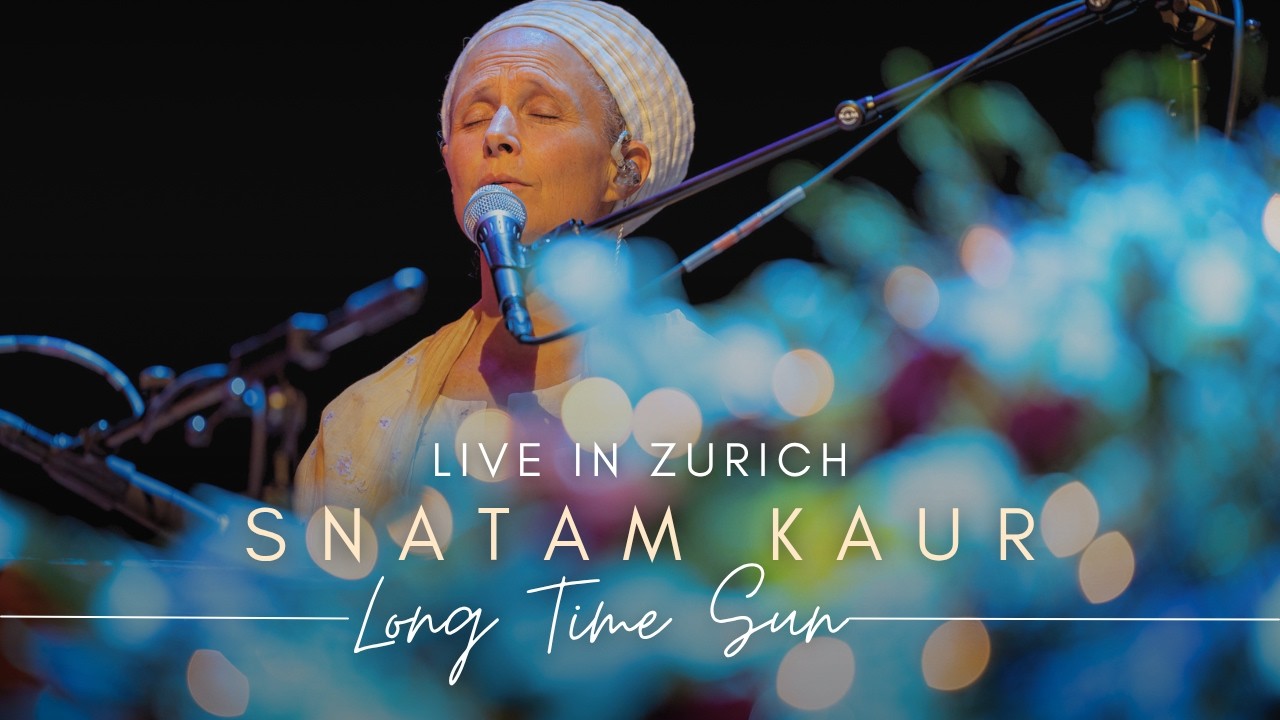
A central teaching in this talk is the power of witness—the act of truly seeing another person's story and acknowledging it. The lyrics embedded in the talk capture this: "Let me hear your story, and I'll be your witness." Witnessing is not the same as fixing. It doesn't solve the problem or erase the pain. But it does something equally important: it names the person as real, as worthy of attention, as not alone.
In the immediate aftermath of mass violence, a community can feel erased—reduced to a tragedy, stripped of their full humanity. The love letters work against this erasure. They say: I see you as a person. I know you are suffering. I know you are more than what happened to you. The act of writing and sending a letter is itself a form of witness. The sender must imagine the recipient, must consider what words might matter. The receiver, in turn, is held in that imagining.
This is why the letters will be preserved in the library rather than discarded or kept private. They become a permanent, accessible record that the community was witnessed. Generations to come can open these books and feel the weight of that collective seeing.
Why Is Distance Dangerous, and How Does Love Bridge It?
One of the song lines in the talk states: "Distance is dangerous, so I'll pull you close." This speaks to a real truth about trauma and grief—isolation deepens suffering. When a community experiences violence, there's a risk that they become isolated, that the broader public moves on, that they are left alone with their pain.
The love letter campaign refuses that isolation. It collapses distance. People across the country—in different cities, different states, likely different faiths and backgrounds—took action to reach toward San Diego. They literally wrote words and sent them across miles. In doing so, they pulled the community closer. They said, through the act of writing and sending: You are not far from me. You matter to me. Your pain reaches me.
This is crucial in a time of increasing polarization and division. After a mass shooting at a mosque, there was potential for the broader non-Muslim community to disappear, to treat the tragedy as something that happened to "them." Instead, thousands chose proximity. They chose to acknowledge that the suffering of Muslims in San Diego is also their concern, their responsibility.
What Does It Mean to Love People Who Are Broken?
The song lyrics state: "We all come here broken, but love can unbreak us if it goes unspoken." This is a reframing of brokenness. The teaching doesn't suggest that trauma makes people permanently broken or that healing means returning to an unblemished state. Instead, it suggests that brokenness is shared—all humans arrive broken—and that love is what can begin to mend.
Importantly, the breaking work requires that love be expressed, not silent. "If it goes unspoken" suggests that love must be voiced, written, made tangible. A private feeling of sympathy doesn't heal. The community had to hear the words, had to receive the letters, had to know that they were held in the hearts and minds of others.
There's also an implicit challenge here to spiritual bypassing. The talk doesn't pretend that love letters solve the problem of mass violence or erase grief. It simply says: love is what can begin the process. It names the long and hard days ahead, acknowledging that this community will face years of recovery. The love letters are not a cure; they are a foundation, a reminder that they do not walk that road alone.
How Does Forgiveness Become Part of Healing?
The song references forgiveness explicitly: "Real people are messy, and so is forgiveness." This is a sober acknowledgment that forgiveness is not simple, neat, or quick. It is something that real people—with all their contradictions and wounds—must navigate.
In the context of mass violence, forgiveness is a fraught territory. The talk doesn't insist on it or spiritualize it. Instead, it acknowledges its complexity: "This act of forgiveness is such tricky business." What matters is what comes before forced forgiveness—it is witness. It is being heard. It is having one's story acknowledged by another person who is willing to sit with the pain, not rush past it.
The connection between witness and forgiveness is significant. When someone has truly been witnessed—when they have been heard and seen—the possibility for forgiveness (whether toward the perpetrator, toward God, toward a community that failed to prevent the violence, or toward oneself) becomes more possible. Not inevitable, but possible. The letters provide witness first; what the community does with that foundation is their own process.
What Is the Role of "Seeing No Stranger"?
The phrase "See no stranger" appears several times in the embedded song. It's a teaching about perception and relationship. A stranger is someone unfamiliar, someone outside our circle. To "see no stranger" is to recognize that all people are part of the same human family, that otherness is an illusion created by distance and lack of contact.
In the context of this talk, "seeing no stranger" is a direct antidote to the possibility that non-Muslim Americans might treat Muslims in San Diego as strangers, as a community with which they have no shared interest or kinship. The love letters are an enactment of this teaching. They say: You are not a stranger to me. We share this earth. Your pain is my concern.
Similarly, "See no monster" reframes how communities speak about each other after violence. The song says: "Monsters are fiction. Real people are messy, and so is forgiveness." This is a refusal to demonize either the perpetrator (which absolves everyone else of responsibility for systemic violence) or the targeted community (which erases their full humanity). It insists on seeing real people—complex, flawed, capable of both harm and love.
How Can Communities Embody Care After Tragedy?
Practically, this San Diego initiative offers a model for how communities can respond to collective trauma. The steps are clear: (1) Make an open call for expressions of love and support. (2) Collect these expressions in a tangible, shareable form. (3) Present them to the affected community through their own leaders (in this case, Imam Taha). (4) Preserve them in a place of continued access—here, a children's library, which signals that healing is intergenerational and ongoing.
The fact that nearly 1,000 people responded speaks to a hunger among ordinary people to respond to tragedy with love rather than fear, with action rather than paralysis. It also speaks to the power of a clear invitation. The community needed to be asked, needed to be told that their love mattered, that it would be received and preserved and delivered.
What's also noteworthy is the diversity of forms the love took: "hands-on pictures, handwritten notes, long letters, short messages." The campaign didn't impose a single format. It honored that people express care differently—some through visual art, some through poetry, some through brief statements. All of it was collected and honored equally.
Where to Go From Here
If you're moved by this model of community healing, consider how it might apply in your own context. If your community faces trauma—whether from violence, environmental disaster, illness, or other collective suffering—how might you organize a campaign to collect and witness love? What would it mean to ask people to write from their hearts, to take time, to send their words across distance?
You might also explore the teaching of "revolutionary love" more deeply. What does it mean in your own life to show up for people who are suffering, especially those you might be tempted to see as strangers? How might you practice "seeing no stranger," recognizing the humanity and complexity of communities different from your own? And what does it look like to offer witness—genuine, attentive, non-rescuing witness—to someone else's grief or pain?
Finally, consider the question embedded in the song: "Let me be your witness. Let me be your sister. Let me be your brother. Let me see you with the eyes of a mother." This is an invitation to a kind of relational love that transcends boundaries of family, faith, and geography. In a time of fracturing, it's a radical choice.